Congressman John Conyers Jr. (D-MI) has reintroduced his National Health Care plan bill HR 676, “The Expanded and Improved Medicare for All Act.” I strongly support a universal national health care program such as HR 676. I also support any effort by any state to implement a state-based single-payer health care plan. Why? For many reasons.
My life was threatened by the multi-company, private health insurance system we currently have.
I received a bone marrow transplant in 1989 from my identical twin sister. Although I had no problem finding a match, I had to jump through many hoops and barriers put up by the two health insurance companies covering my sister and myself. In the case of my insurance provider, I was refused coverage of the donor portion of the transplant because my twin sister wasn’t on myAccording to Health Care for America,
Back to my story. I went into battle mode against the insurance companies when I was told that they would let me die because of their bottom line and attempts to deny coverage. Because of the support and advocacy I had through the organization where I self-purchased my health insurance (the National Organization for Women), we were finally able to get me the life-saving transplant that I needed. And I am here today.
This experience is why I became an advocate for a single-payer health care system rather than the current system that allows private companies the ability to deny critical health care to “save” their bottom line for profit only.
Other Reasons why I support a Universal Health Care Plan at Either the National or State Level.
It is the ethical and moral to treat all people, regardless of economics or status when they are sick.
A 2009 article in the Journal of Public Health reports that approximately 45,000 people on average die each year due to lack of health insurance. One of the goals of The Affordable Care Act (ACA) is to reduce the number of people without health insurance, so that premature deaths from lack of coverage would also be reduced.People will continue to struggle to receive
The Centers for Disease Control acknowledges that access to coverage will improve under the ACA. But that acknowledgement holds a caveat; they state, “Even after ACA is implemented fully, some persons eligible for coverage might go uninsured.” The ACA will not fully resolve this ethical and moral threat to peoples’ lives.
Some states are threatening people’s health care and lives based on decisions either by their legislature and/or their governors.
These states place people who could have been covered under the Expanded Medicaid program in continued jeopardy since they will neither be able to sign up for Medicaid nor be able to afford private health insurance through the ACA’s health care exchanges. The 13 states that have already threatened the healthcare of their citizens are Alabama, Georgia, Idaho, Louisiana, Maine, Mississippi, North Carolina, South Carolina, South Dakota, Oklahoma, Pennsylvania, Texas, and Wisconsin. Five states – Iowa, Nebraska, New Jersey, Virginia, and Wyoming—are leaning towards opting out of coverage. Kentucky, New York and Oregon haven’t yet made their decision, but do appear to be leaning towards opting into full ACA with the expanded Medicaid coverage. All remaining 22 states plus the District of Columbia have opted into full ACA with the expanded Medicaid coverage.
Via: The Advisory Board Company
For the low-income people living in the 18 states that have either opted out of or are considering opting out of the expanded Medicaid coverage, nothing changes for them since most of these individuals will not be able to afford private health insurance in the new health care exchanges under the ACA.
A Single Payer, Universal Healthcare program would cover everyone.
According to predictions by the Congressional Budget Office and the Joint Commission on Taxation, we will we still have 30 million uninsured in 2023 under Obamacare. At the same time, health care costs for our nation, states, and families will continue to increase. A single-payer, universal healthcare program could cover everyone at lower cost. Everyone in and no one out regardless of income or health status.The BETTER Alternatives: National and State-Based Single-Payer Plans
The plan introduced by Representative Conyers is basically an expansion of the efficient and cost-effective Medicare system currently used by the elderly and people with disabilities. Its overhead (all costs other than for healthcare) is much lower–and patient satisfaction is much higher–than under for-profit healthcare. And it would cover everyone regardless of their economic or health status without fear of an insurance company denying coverage to save their bottom line.Similarly, legislation is being considered in about half of the states to create state-based single-payer healthcare programs. Some of these states’ legislatures have held hearings and/or had votes on universal healthcare. Vermont has already passed a law that sets in place the possibility of a single-payer healthcare program by 2017. 2017 is the year that the ACA—aka “Obamacare”—allows states to try other healthcare plans IF they cover at least the same number of people with at least the minimum coverage under the ACA.
Obamacare is now the law of the land. It is an improvement over what we had before 2009. It is also the basis from which we can work towards a comprehensive healthcare program. We could do it nationally, such as with HR 676. Or, like Canada, we can start at the state level.
So check out HR 676. See if your Representative is one of the 40 current co-sponsors. If not, meet with him/her, tell your personal story about why you support an expanded and improved Medicare for All, and ask them to co-sponsor the bill. If he/she is already a co-sponsor, ask your Representative to take the next step. They can hold a town-hall meeting on universal healthcare to hear from their constituents. They can also call on the chairs of the three committees reviewing HR 676 to hold Congressional hearings on HR 676. These three committees are the House Energy and Commerce Committee, the House Ways and Means Committee, and the House Natural Resources Committee.
Also get active with your state-based single-payer organization. These local and state-based single-payer health care groups will let you know how can help with your state-based legislation. Healthcare NOW has a full listing of state- and local-based organizations. If your state does not have a single-payer chapter yet, contact Healthcare NOW at their national office in Philadelphia, PA; they can help you to organize a plan for your state.
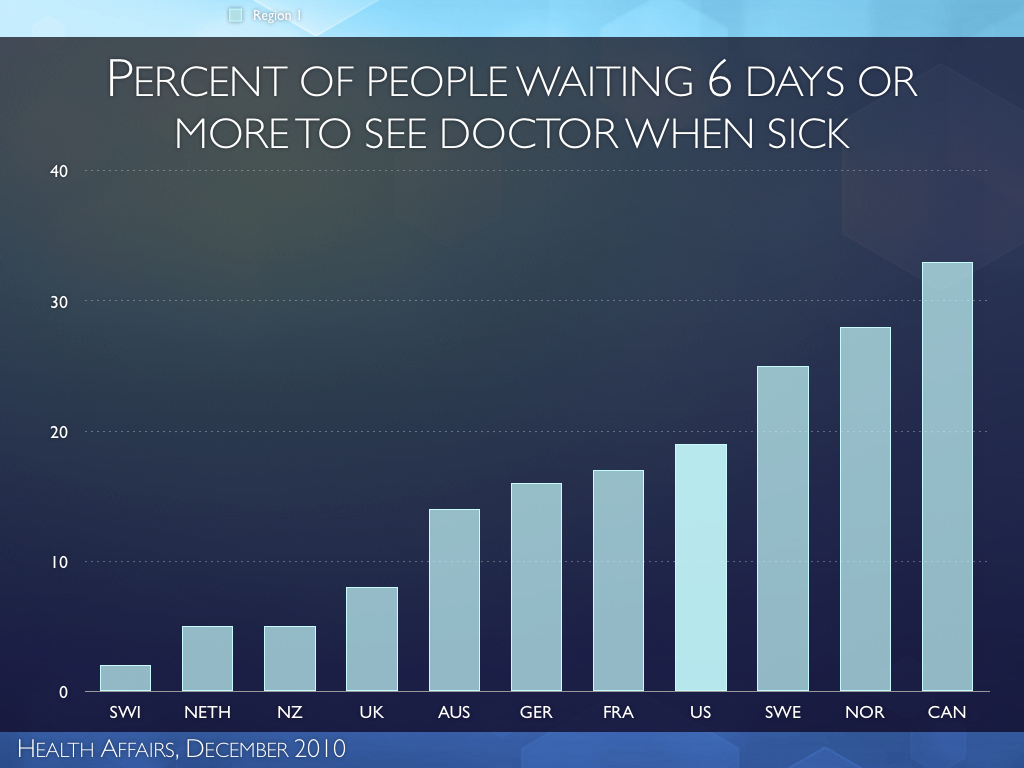
All other “advanced” nations have already adopted comprehensive healthcare systems. All deliver better health outcomes at a lower per capita cost than the USA. Let’s get cracking. Let’s do it here in the US of A as well.
**Related Post**
Joanne Tosti-Vasey's Bone Marrow Transplant Story