Thursday, September 5, 2013
"Stop bullying" rally targeting UPMC planned for weekend
There will be a Save Our Community Hospitals rally this Saturday in Oakland. Details can be seen below.
http://makeitourupmc.org/2013/08/upmc-stop-bullying-pittsburgh/
Thursday, August 29, 2013
State of Working PA: Slowing Job Growth, Falling Wages Impede Recovery (and The Drop in Uninsured)
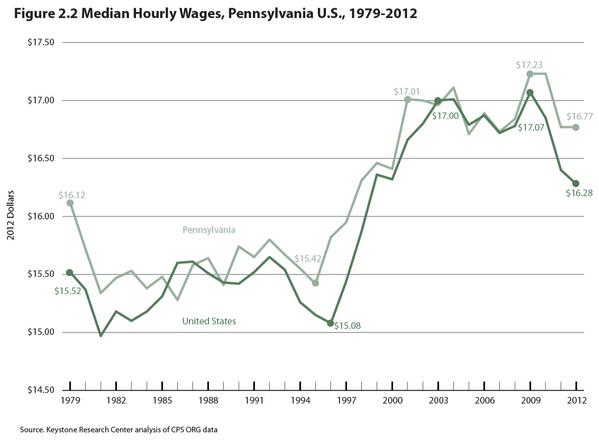
The Keystone Research Center is a great resource for economic data on Pennsylvania. They have come out with a report on the state of wages in PA. Above is a graph from their report showing how wages have declined since the recession began in 2009 and a map from them showing where unemployment remains the highest in the state. You can read their full report and listen to a podcast about it at the link below. The impact of UMPC on wages is even discussed.
State of Working PA: Slowing Job Growth, Falling Wages Impede Recovery
The drop in median wages since 2009 is not as large in PA as the US as a whole is not necessarily cause for celebration. The rate of uninsured in Pennsylvania has also been historically lower than the nation's. The median wage is the wage that would be placed right in the middle when all the wages of all citizens are ranked from highest to lowest. The Census Bureau has come out with the newest Small Area Health Insurance Estimates for the year 2011. The state rate has declined from 12.1% in 2010 to 12.0% in 2011 (the change is within the margin of error of +/- 0.2% so it's really no change). I will be doing future posts on the county level estimates and seeing how they correlate with other county level variables such as unemployment.
The small to nonexistent statewide drop is troubling as certain parts of the Affordable Care Act (aka Obamacare) have taken effect such as parents being able to keep their kids on their insurance until age 26. Once the individual mandate (the least popular part of the Act) takes effect on Jan 1, 2014, wage decline could have a serious confounding effect on purchasing insurance and keeping up with co payments. This is especially exacerbated since Gov. Corbett has refused to expand Medicaid.
**Related Posts**
Economic Impact Study Press Release
National, State, & County Uninsured Estimates
CBS This Morning Report on UPMC
Pennsylvania's New Fiscal Year Without Expanded Medicaid
Wednesday, August 21, 2013
Why Are American Health Care Costs So High?
Here's a 8-minute video by author John Green that repeats some arguments that are familiar to single-payer advocates, but in a very clear and concise way.
Another Shoe Drops
We will place a limit on how much you can be charged for out-of-pocket expenses, because in the United States of America, no one should go broke because they get sick.
Barack Obama (2009)
One of the most important consumer protections used to sell the Affordable Care Act was the annual limit on the out-of-pocket health care costs that insurance companies were allowed to charge consumers. The ACA states that, beginning in 2014, insurers cannot ask clients to pay more that $6,350 annually per individual, or $12,700 per family, in health care expenses—a sum of money that is already well beyond the means of many American families.
Now, after postponing the employer mandate—but not the individual mandate—the Obama administration has quietly postponed the cap on out-of-pocket costs as well. This was done without any public announcement. Instead, they changed the Department of Labor website's “FAQs about Implementation of the Affordable Care Act (Part XII).” Apparently the change was made in February, but went unnoticed until it recently came to the attention of New York Times health reporter Robert Pear. So far, it has remained under the radar of most of the mainstream media, but Republicans will undoubtedly make it a 2014 campaign issue.
What this means is that, at least through 2014:
- Insurance policies that currently have no limits on out-of-pocket health care costs may continue not to have any limits.
- Policies which have separate out-of-pocket limits for different components of coverage, i.e., separate limits for hospital costs and prescriptions drugs, may continue to apply these separate limits even though they total more than $6,350 per individual and $12,700 per family.
The people who will be hit hardest by this change are people with disabilities or chronic medical conditions, who will no doubt continue to go bankrupt at the current rate.
The reason given for this postponement is almost absurd in its cynicism. More than three years after the ACA was signed, we are asked to believe that insurers “need more time to comply” with the law because some of them “have separate computer systems that cannot communicate with one another.” (I would guess that insurance companies could reset their computers in three weeks if there were money to be made by doing so.)
The Times quotes an unnamed administration official as saying, “We had to balance the interests of consumers with the concerns of health plan sponsors and carriers, . . .” But it's hard to see much balance in these two recent changes to the ACA. Rather, they are best described by the title of a July 2 blog by Obama advisor Valerie Jarrett: “We're Listening to Businesses About the Health Care Law.” Once again, the interests of Americans suffering from serious health problems are subordinated to American corporations' insatiable drive to maximize profits.
You may also be interested in reading:
Tuesday, August 20, 2013
Dominick Buscemi has a Great Post on Single Payer in Allentown
Allentown Single payer advocate Dominick Buscemi (no relation to Steve, I think. No photo available.) Has written a great OP-ED on the Allentown Morning Call which can be read below.
Dominick Buscemi: Pa. can adopt single-payer health care system
I found myself agreeing with something John Brinson said in his recent Your View about Obamacare (a scary thought for a progressive liberal who sees President Obama as a moderate Republican); we both think Obamacare is too complicated, expensive and inadequate. End of agreement.
According to the U.S. Census Bureau, 12.1 percent (1.2 million) of Pennsylvanians were uninsured in 2010, up from 11.7 percent in 2009 and 10.6 percent in 2008. This is a grossly inefficient system. Obamacare will still leave about 30 million Americans uninsured.
Read more: http://www.mcall.com/opinion/mc-single-payer-health-insurance-buscemi-yv-20130819,0,5533781.story#ixzz2cZE0HJlm
Follow us: @mcall on Twitter | mcall.lv on Facebook
Read more: http://www.mcall.com/opinion/mc-single-payer-health-insurance-buscemi-yv-20130819,0,5533781.story#ixzz2cZEAfyxG
Follow us: @mcall on Twitter | mcall.lv on Facebook
Dominick Buscemi: Pa. can adopt single-payer health care system
I found myself agreeing with something John Brinson said in his recent Your View about Obamacare (a scary thought for a progressive liberal who sees President Obama as a moderate Republican); we both think Obamacare is too complicated, expensive and inadequate. End of agreement.
Obamacare is just a variation of the current fiasco, a multipayer health insurance system. The payers are private insurance companies. Each company offers a multitude of plans, each with varying levels of deductibles, co-payments and coverage. Now imagine trying to navigate this maze with your parents.
This privatized multipayer system puts profits first, denies claims to maintain profit margins and is responsible for more than 60 percent of Pennsylvania personal bankruptcies. The average physician spends $84,000 to interact with private insurance companies annually. Obamacare is a gift to greedy insurance executives.
According to the U.S. Census Bureau, 12.1 percent (1.2 million) of Pennsylvanians were uninsured in 2010, up from 11.7 percent in 2009 and 10.6 percent in 2008. This is a grossly inefficient system. Obamacare will still leave about 30 million Americans uninsured.
Read more: http://www.mcall.com/opinion/mc-single-payer-health-insurance-buscemi-yv-20130819,0,5533781.story#ixzz2cZE0HJlm
Follow us: @mcall on Twitter | mcall.lv on Facebook
Now, here's where Mr. Brinson and I will most likely disagree. A provision in Obamacare lets states in 2017 opt out if they can provide equal or better coverage for their residents.
This means that Pennsylvania can have a single-payer system — one insurance plan that has one payer to cover all Pennsylvania taxpayers. This plan would be funded by a flat rate of 3 percent of income for individuals and 10 percent of payroll for businesses, and it would place you and your doctor in charge of your family's health care. Everyone contributes, everyone benefits. Simple. It would be public-private hybrid with the insurance function provided by the state government, and the medical care would be privately delivered by a doctor or hospital of your choice.
A single-payer system would provide comprehensive coverage: medical, dental, eye care, physical therapy, mental health, hospice, addiction, long-term care, wellness, prescriptions and emergency transport. Everyone would be covered; you choose your doctor, and you won't need a lawyer to interpret your plan.
A recent study — available at http://www.healthcare4allpa.org/economic-impact-study — shows that a single-payer plan would also save the state more than $17 billion annually. Every school district and municipality would save under this plan. Since all care is covered, there would be no medical-caused bankruptcies.
A single-payer system would be an incentive for business to move to Pennsylvania by making our state competitive with other industrialized nations whose businesses have the advantage of not having to budget for ever-changing health costs.
Workers' compensation premiums would also be eliminated because everyone is fully covered for any medical emergency and treatment. Our homeowners and automobile liability coverage would be cheaper, too, because medical costs would be taken out of the insurance cost calculation.
How do we get this type of health coverage? The wheels are already in motion. On March 19, Sen. Jim Ferlo, a Democrat from western Pennsylvania, announced the re-introduction of Senate Bill 400, which would create the Pennsylvania Health Care Plan, which I've outlined here.
As stated in Sen. Ferlo's press release: "Logic alone won't win the day. Only when we have enough people demanding a single-payer plan will we break the stranglehold that profit-first insurance companies use to prevent true reform."
At the Health Care for All PA website, there is information and a calculator to let you estimate you annual health care cost with a single payer. Check it out, and if you agree, contact your representatives and urge them to support the Pennsylvania Health Care Plan.
Dominick Buscemi, who lives in Lower Mount Bethel Township, is the organizer for the Lehigh Valley Health Care Reform Meetup Group and a member of Health Care for All PA.
Read more: http://www.mcall.com/opinion/mc-single-payer-health-insurance-buscemi-yv-20130819,0,5533781.story#ixzz2cZEAfyxG
Follow us: @mcall on Twitter | mcall.lv on Facebook
**Related Posts**
Friday, August 9, 2013
New State Website is UP!!
The statewide organization for Healthcare for All PA has a new website with lots of accessible information on single payer, especially with links to the full economic impact study. It can be viewed at the link below
http://www.healthcare4allpa.org/
Wednesday, August 7, 2013
Ferlo's Inspirational Speech on Single Payer
The war of words over the Affordable Care Act (aka Obamacare) is heating up once again as the date for implementation approaches in Jan 1, 2014. Some in Congress such as Sen. Ted Cruz R-Tx are openly talking of shutting down the federal government to defund the act.
A new inspirational talk on the advagntages of a single payer system has been posted by the Healthy Artists Project by State Sen Jim Ferlo D and can be seen above.
**Related Posts**
Obama on the Employer Mandate: ". . . never mind. . . ."
Harrisburg News Report on Economic Impact Study and Single Payer Bill
Subscribe to:
Comments (Atom)