Thursday, September 26, 2013

Ted Cruz Does a Reach Around on the Affordable Care Act


Sen. Ted Cruz (R-TX) launched a 21 hour pseudofilibuster on a bill with a provision which he voted for to defund the Affordable Care Act which Jon Stewart beautifully lampoons above.  He claimed that the act would increase premiums for everyone and for small businesses while denying care.  The White House came out with data projecting what premiums will be for each state including Pennsylvania which looks cheaper that what I'm paying now.  The full report can be read here.  The proof will be in the pudding when the exchanges start operating Oct. 1 on the cost and adequacy of care.  Ted Cruz's state has 25.7% uninsured.

As an aside, Healthcare for All PA has been featured in The Huffington Post in an article by Linda Bergthold.  The Economic Impact Study, The Healthy Artists Project, and The State Single Payer bills are discussed.


**Related Posts**


A Statistical Profile of the Uninsured in Washington, DC, New Mexico, and Texas


Wednesday, September 18, 2013

A Clouded Vision, Part 2: The Carrot

Please read Part 1 of this post.

The Carrot

If the Obama administration agrees to the Medicaid "reforms" described in Part 1, then Pennsylvania will accept its gift of virtually free money. However, there is an important catch. People who make up to 133% of the Federal Poverty Level (FPL) will be given this money to purchase private insurance policies through the national health insurance exchange. (Corbett refused to establish a PA exchange, so Pennsylvanians will be using the national exchange.) This means that people who would have been eligible for Medicaid expansion under the Affordable Care Act (ACA) will now be exposed to all the disadvantages associated with the private insurance market, including copayments that are likely to be considerably higher than PA Medicaid's current copayments. An exception is made for people in this income group deemed to be “medically frail,” who will be allowed to enroll in PA Medicaid.

Moreover, there is ambiguity in the meaning of this proposal. Most of you probably know that private health insurance offering comparable coverage is significantly more expensive than Medicaid—about $3000 more per person per year, according to the Congressional Budget Office. It is possible that Corbett is asking the federal government to pay the full cost of these private policies, in which case it will be paying more for Medicaid expansion in PA than in other states. The other possibility is that Pennsylvanians will be given a sum of money comparable to the cost of Medicaid, and they will either have to pay part of the premium themselves or accept less comprehensive coverage. A similar plan proposed by Arkansas asks the federal government to pay the full cost of Arkansans' private insurance, but it's not certain if this is legal. If this is what Corbett is proposing, people from other states are being asked to pick up part of the tab for PA's more expensive private health insurance! Since conservatives claim to be concerned about the high cost of providing health care to poor people, this seems like an odd stance for them to be taking.

Not mentioned is the fact that adding so many low income people to the exchanges will almost certainly drive up the cost of insurance premiums for everyone, since they are likely to be in poorer health than the general population.

There is no timetable for when Corbett's plan will take effect, but since it was not submitted to the Obama administration until now, it's unlikely to be available in January 2014.

People who are committed to health care for all Pennsylvanians will find obvious drawbacks to Corbett's Medicaid “reform” package. It significantly weakens the Medicaid program. It increases costs and reduces benefits for the poorest Pennsylvanians, and is almost certain to result in less actual health care being received. The job search requirements are unnecessarily punitive in an economy that falls far short of providing full employment and seem designed to force Pennsylvanians to accept jobs that fail to provide a living wage.

The “expansion” component of the package is likely to drive a wedge between progressive groups. On the one hand, it's just more corporate welfare for the private health insurance companies, corporations that are almost certainly among Corbett's and the Republicans' more generous contributors. On the other hand, if the proposal is accepted, 500,000 to 700,000 working class Pennsylvanians who are presently uninsured will receive some health care. It won't be as good as what they would have received under the ACA, but many progressives will argue that something is better than nothing.

Compared to Medicaid expansion under the ACA, The two parts of Corbett's plan  represent a significant transfer of wealth from PA's poor and working class citizens to some of its largest and most profitable corporations.

Single-payer health care advocates are faced with a similar conflict to the one they faced with the ACA. Is half a loaf better than none? As the loaf gets progressively smaller, at what point do we withdraw our support and say, “No more!”?

Whether Corbett's plan will be implemented depends on whether it is accepted by the Obama administration. How “flexible” is the President willing to be? Similar plans have been advanced by Arkansas and Iowa, but Health and Human Services has not yet announced whether they will be approved. One feature of Corbett's plan that is unprecedented is the job search requirement as a condition of receiving Medicaid. Some states charge monthly premiums for Medicaid, but only for people with incomes above 100% of FPL. Are there any health care principles that Obama will not compromise? Having already moved pretty far to the right, Corbett's plan may seem to the White House to be just a baby step further.

Watch this space. Further details of the plan and data describing its financial impact are likely to become available soon. I will update this report as soon as they do.

You may also be interested in reading:


A Clouded Vision, Part 1: The Stick

With his reelection campaign coming up next year, PA Governor Tom Corbett is apparently no longer able to resist the pressure to accept Medicaid expansion under the Affordable Care Act (ACA). Yesterday he unveiled the bare bones of a plan to expand Medicaid, while claiming that he is not. The plan lacks critical details and leaves many questions unanswered. It has not yet been accepted by the Obama administration, and should they not agree to it, it would fall through. It has, however, been endorsed by two powerful health care lobbies, the Pennsylvania Medical Society and the Hospital and Health System Association of Pennsylvania.

The plan is called “Healthy Pennsylvania,” and is described in official propaganda as “Governor Corbett's vision” for Pennsylvania. Much of the plan is empty rhetoric, referring to health care policies that are already in place, or new initiatives that appear not to be accompanied by any proposed legislation. Some of the new initiatives—such as “reform” of the medical liability system—are not good ideas, but I'll save that argument for another day. Of the four documents the Corbett administration has released, those parts of the plan that refer to Medicaid reform or expansion are described most clearly in this document.

We can think of the plan as having two parts—the carrot and the stick. The stick is “reform” of PA's existing Medicaid program, which Corbett says is too costly. These changes have the effect of reducing Medicaid benefits to healthy adult recipients, and increasing costs for most recipients. The carrot is a flawed version of Medicaid expansion through private insurance, which Corbett insists is not Medicaid expansion at all. (He's right.) He will agree to expand health insurance availability if and only if he gets his way and the feds agree to his “reform” plan.

The Stick

PA's existing Medicaid program is one of the stingiest in the country. Healthy adults only qualify for Medicaid if they earn less than 46% of the Federal Poverty Level (FPL). Children under six are covered up to 133% of FPL, and older children up to 100% of FPL. The aged, blind and disabled are also eligible up to 100% of FPL, but only if they have assets of less than $2000 per individual or $3000 per couple.

Corbett repeatedly refers to PA's Medicaid program as one of the most expensive in the nation. It's true that PA spends 34% more than the national average per enrollee. However, PA has fewer enrollees per capita than most other states. The chart below compares PA's Medicaid recipients to those of the US generally. PA has fewer healthy adults, who are the cheapest to cover, because of its strict eligibility requirements for this group. A higher percentage of its enrollees are seniors and people with disabilities, who require more expensive long-term care. Moreover, only 22% of PA's long-term care budget is spent on community and home-based care. The national average is 40%.


Here is what Corbett is proposing. To avoid confusion, remember that these “reforms” only apply to people who are currently eligible for PA's traditional Medicaid.
  1. Changes in benefits. Proposed changes in benefits only apply to healthy adult recipients; benefits for children, seniors and people with disabilities will remain unchanged. Medicaid benefits are to be aligned with the benefits provided by private, commercial insurance available in PA's workplaces. What these benefits will be, of course, depends on what private policies they use as their standard. Will they more closely resemble the corporate executive package or the Wal-Mart package? They don't say. But since the goal of the plan is to save money, it is reasonable to assume that they are planning to reduce benefits below what Medicaid enrollees currently receive.
  1. Cost-sharing. Cost-sharing is to be achieved by charging a monthly premium. The premiums begin for people who are above 50% FPL. These minimum premiums are not stated. However, they increase on a sliding scale up to a maximum of $25 per month per individual and $35 per household at 133% of FPL. Although it is not explicitly stated, presumably everyone, including children, seniors and the disabled, will pay these premiums. (Healthy adults are only covered up to 46% of FPL, so there would be no need for this cost-sharing plan if it only applied to healthy adults.) Premiums will be indexed to inflation, so they will go up each year.
  1. CopaymentsMedicaid copayments, which are not particularly high, are eliminated entirely, with one exception. There is a $10 copayment for “unnecessary” or “inappropriate”—as yet undefined—emergency room use. This latter proposal has long been part of the hospital lobby's wish list.
  1. Work search requirements. Healthy adult recipients will be treated just like people who apply for unemployment. All working age, unemployed recipients will be required to engage in a job search through PA JobGateway program. There is a premium reduction—amount unspecified—for people participating in job training and work search.
  1. Wellness programs. There is also a premium reduction—amount unspecified—for people who participate in wellness programs. Research has so far not shown wellness programs to result in measurable health improvements.
Corbett says his Medicaid “reform” package will result in “significant cost savings.” Will it actually save money? The monthly premium seems to be the only financially significant part of the package. Most of the rest of the plan only applies to healthy adult recipients, which limits its ability to save money, since so few current enrollees fall into this category.

Please read Part 2 of this post.

You may also be interested in reading:


Saturday, September 7, 2013

The Affordable Care Act (ACA) having little effect on PA's Uninsured Rate So Far


As I said in my last post the new Small Area Health Insurance Estimates are out for every county in the US.  The overall trend for the state can be seen below since 2008 for those between the ages of 18 and 65.  The change in the rate has leveled off from 2010 to 2011 as parts of the ACA or Obamacare have come into effect like letting parents keep their kids on their insurance until age 26.


Year
Uninsured %
Uninsured MOE
2008
10.6
.2
2009
11.7
.2
2010
12.1
.2
2011
12.0
.2


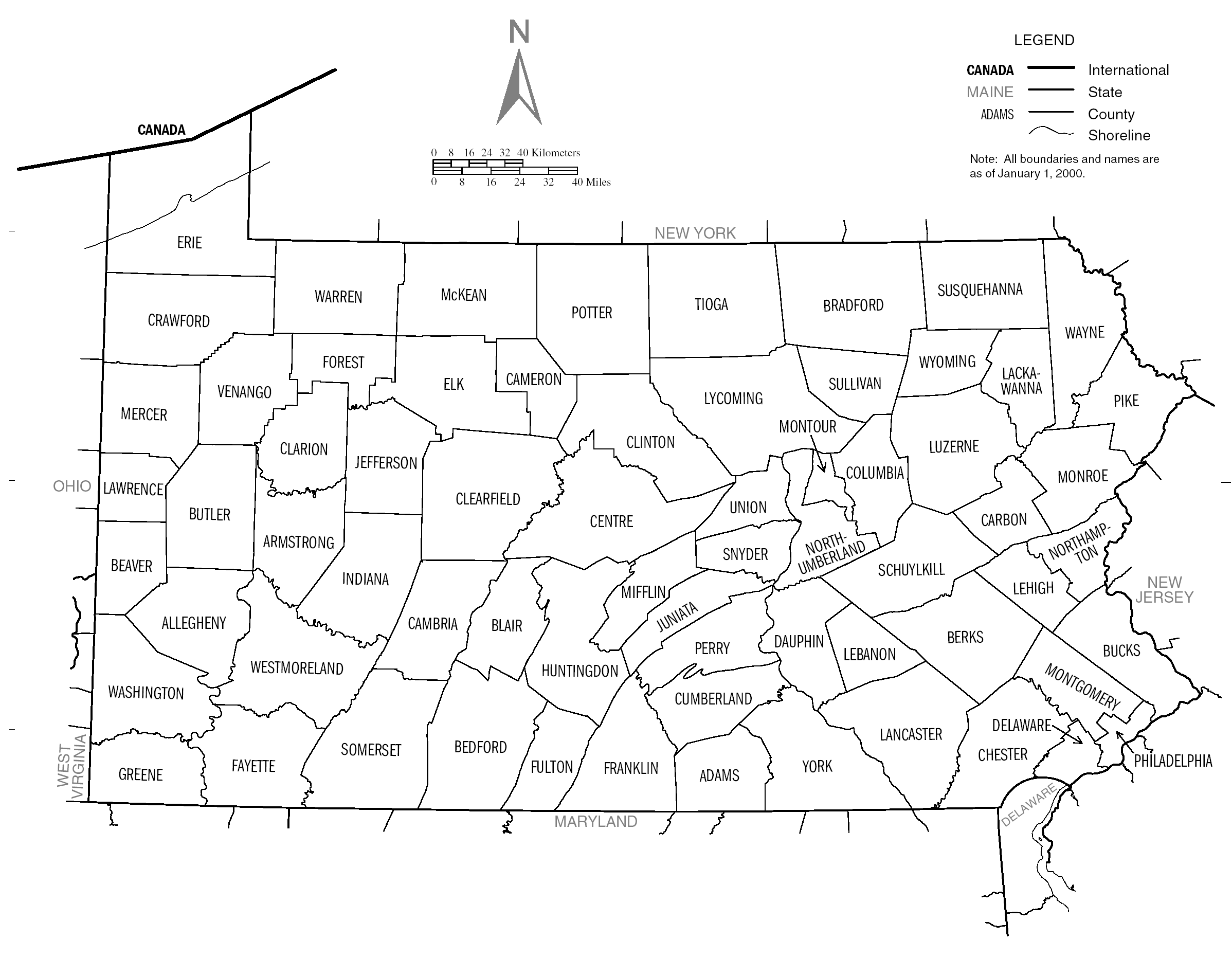
The top 10 counties in the state are presented below and blow that the rates for the top 10 in 2010 are shown.  I added a map to show there they are located.  While there is hardly any change in the rates for Philadelphia there is some decrease for the other counties which are mostly within the margin of error (MOE).  Counties with larger populations have larger MOE's.


county
% Uninsured 2011
MOE Uninsured 2011 (+/- %)
1
Philadelphia
16.30
.20
2
Mifflin
14.90
1.40
3
Snyder
14.90
1.30
4
Crawford
14.80
1.20
5
Franklin
14.60
1.20
6
Juniata
14.40
1.30
7
Monroe
14.40
1.10
8
Perry
14.40
.70
9
Sullivan
14.30
1.40
10
Bedford
14.30
1.20


Portions of the ACA have been implemented with full implementation originally scheduled for next year but other portions of it such as the employer mandate delayed.  It still remains to be seen what impact full implementation will have on the state and the rest of the nation.  Below is a table with all 67 counties in alphabetical order plus the state rate at the top from 2008-2011 so you can see how your county's rate has changes over this period.  I added the MOE for 2011 for comparison purposes.


county
% Uninsured 2008
% Uninsured 2009
% Uninsured 2010
% Uninsured 2011
MOE Uninsured 2011 (+/- %)
Pennsylvania
10.60
11.70
12.10
12.00
.20
Adams
11.60
12.40
12.40
12.50
1.00
Allegheny
9.10
10.40
10.40
10.30
.60
Armstrong
12.20
11.80
12.10
12.10
1.00
Beaver
9.70
9.90
10.20
10.90
.90
Bedford
12.80
12.80
14.40
14.30
1.20
Berks
10.40
12.40
12.40
12.70
.80
Blair
10.30
11.80
12.20
11.20
1.00
Bradford
11.60
12.90
13.80
13.40
1.10
Bucks
7.60
8.00
8.80
8.70
.60
Butler
8.70
9.80
9.70
9.60
.80
Cambria
11.10
12.10
12.00
11.20
.90
Cameron
12.50
13.00
13.10
12.40
1.30
Carbon
11.60
11.90
13.40
12.40
1.20
Centre
10.60
11.20
12.60
11.80
1.20
Chester
7.90
8.50
9.50
9.50
.70
Clarion
12.70
13.60
13.80
13.50
1.30
Clearfield
12.60
13.50
13.20
12.70
1.10
Clinton
11.50
12.60
13.40
13.80
1.30
Columbia
11.30
11.90
12.00
11.90
1.10
Crawford
13.20
14.10
14.60
14.80
1.20
Cumberland
9.30
9.90
9.70
9.70
.80
Dauphin
10.20
11.80
11.70
11.70
.90
Delaware
9.10
10.00
10.90
10.20
.70
Elk
9.90
10.70
10.80
11.30
1.10
Erie
11.00
11.30
11.90
12.50
.90
Fayette
12.10
13.80
13.50
13.30
1.10
Forest
13.40
15.10
14.20
13.90
1.40
Franklin
12.80
13.80
14.00
14.60
1.20
Fulton
12.90
13.30
13.30
12.90
1.20
Greene
10.90
13.10
11.30
11.10
1.10
Huntingdon
12.80
15.30
12.30
12.70
1.10
Indiana
12.00
13.70
13.90
12.50
1.10
Jefferson
12.10
12.70
14.20
13.90
1.20
Juniata
13.60
14.30
15.60
14.40
1.30
Lackawanna
10.20
11.10
12.60
12.20
1.00
Lancaster
13.20
13.90
14.40
14.20
.90
Lawrence
12.10
11.90
12.70
12.30
1.00
Lebanon
11.60
11.70
12.10
11.10
1.00
Lehigh
11.60
12.00
12.80
13.30
.90
Luzerne
10.40
11.40
12.90
12.50
.90
Lycoming
10.70
12.40
12.60
13.50
1.10
McKean
10.30
12.90
12.40
11.90
1.10
Mercer
10.70
11.90
12.10
12.00
1.00
Mifflin
12.90
14.50
15.80
14.90
1.40
Monroe
12.20
12.50
13.40
14.40
1.10
Montgomery
7.30
8.00
8.10
8.40
.60
Montour
7.90
10.00
10.00
10.50
1.10
Northampton
9.80
11.40
11.10
11.10
.80
Northumberland
12.10
13.30
13.30
13.00
1.10
Perry
12.90
12.10
14.20
14.40
.70
Philadelphia
13.80
16.30
16.50
16.30
.20
Pike
12.40
11.50
13.60
13.10
1.10
Potter
11.30
13.10
14.40
13.70
1.30
Schuylkill
10.70
12.10
12.00
12.30
1.00
Snyder
12.40
15.10
14.00
14.90
1.30
Somerset
13.30
14.10
15.00
13.90
1.10
Sullivan
15.60
14.80
15.90
14.30
1.40
Susquehanna
12.70
13.40
14.80
14.00
1.20
Tioga
12.70
14.70
14.70
14.20
1.20
Union
13.70
16.70
13.70
12.30
1.20
Venango
10.90
12.40
12.90
12.30
1.10
Warren
10.00
11.90
12.40
12.70
1.10
Washington
10.70
10.10
10.70
10.70
.80
Wayne
13.20
13.20
14.80
13.50
1.20
Westmoreland
9.90
10.10
10.50
10.20
.70
Wyoming
11.00
11.30
11.30
11.80
1.10
York
10.30
10.20
11.10
11.70
.80


**Related Posts**


National, State, & County Uninsured Estimates